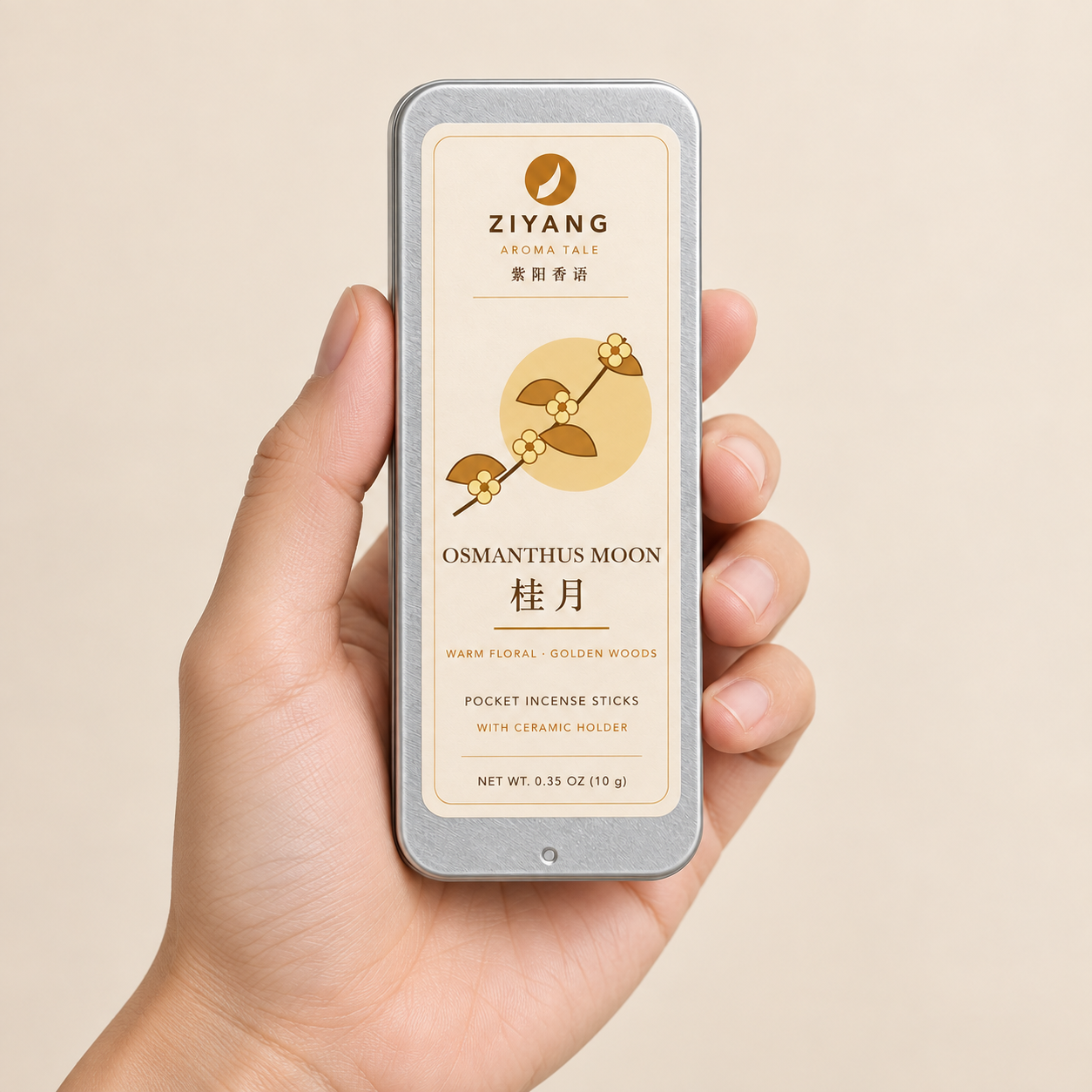
Chinese Incense as an Eastern Decorative Art
Chinese incense culture includes fragrance, vessels, tools, table arrangements, and the changing form of smoke. Together, these elements create an experience that is both practical and visual.
Form and material
Burners may be made from ceramic, metal, wood, or mixed materials. Their shapes range from restrained bowls and boxes to sculptural landscapes. The appropriate vessel depends on whether the incense is a stick, coil, cone, powder, or seal pattern.
Composition
A simple arrangement can combine a burner, an ash-catching surface, and a small number of related objects. Negative space is useful: it keeps the arrangement legible and leaves a clear safety area around the ember.
Cultural context
Incense traditions differ across regions, periods, communities, and religious or secular settings. Product names and decorative motifs should be understood as design references unless a specific historical source is documented. Respectful appreciation avoids presenting a symbol as a guaranteed source of luck, protection, or personal change.
Safe use
- Use a stable, heat-resistant holder on a clear surface.
- Keep away from drafts, fabrics, children, and pets.
- Ventilate the room and stop use if smoke or fragrance causes discomfort.
- Never leave burning incense unattended; extinguish it fully before leaving the room or resting.