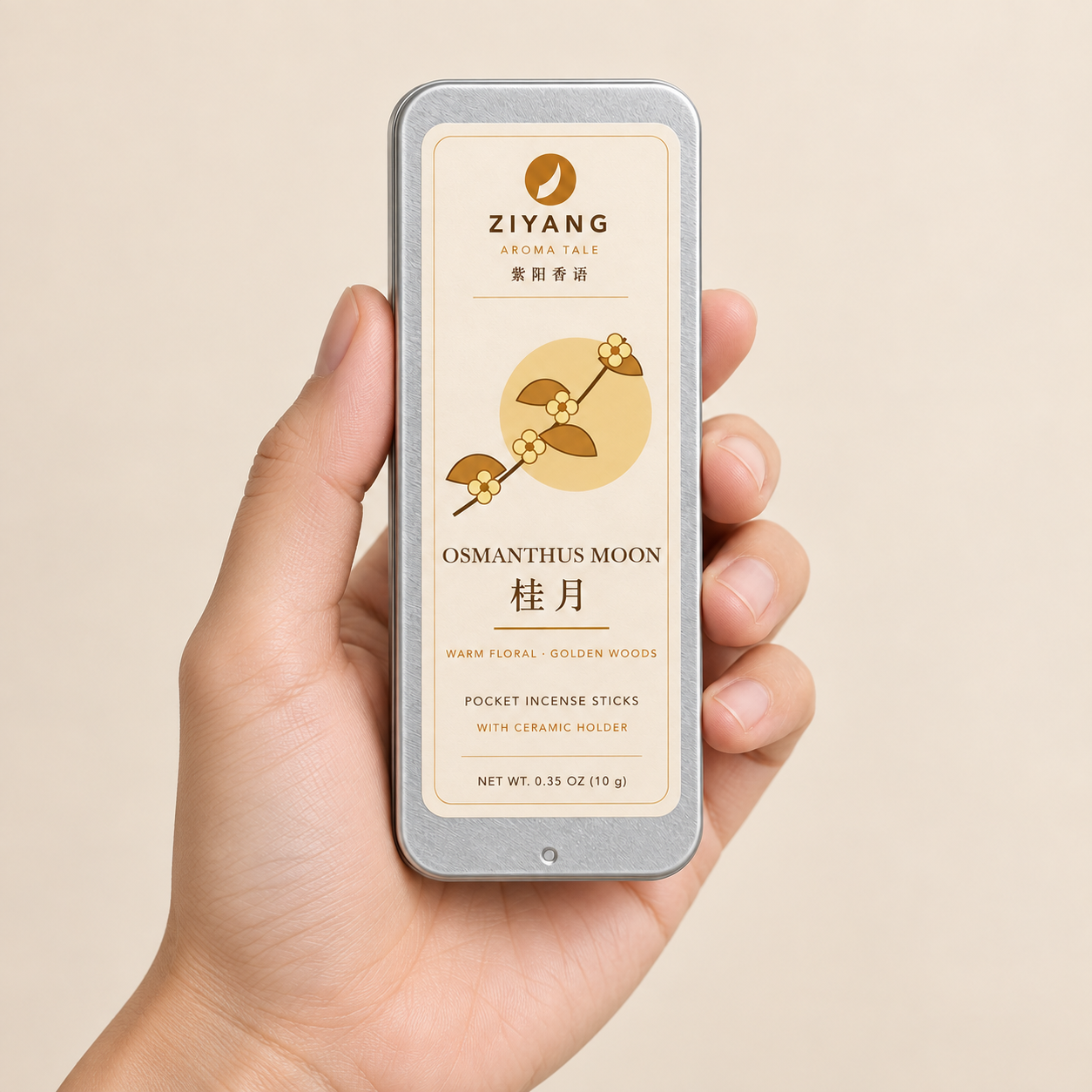
A Guide to Chinese Incense Aroma Profiles
Aroma vocabulary makes incense easier to compare. Product names may refer to a featured material, a place, a poetic theme, or a blended fragrance, so the label remains the best source for the stated ingredients.
Common profile families
- Woody: dry, warm, creamy, resinous, or lightly smoky impressions.
- Floral: soft, sweet, powdery, green, or nectar-like impressions.
- Herbal: dry leaves, roots, spice, or fresh green impressions.
- Fruit-inspired: pear, citrus, or other sweet and bright accords.
- Resinous: dense, balsamic, warm, or church-like impressions.
How to compare two products
Use the same room, holder type, and approximate burn period. Note the opening scent, the fragrance while burning, the smoke level, and what remains after extinguishing. Ventilate between products so one aroma does not mask the next.
Read claims carefully
A geographic or material name in a title is not proof of origin, species, grade, or composition. Look for explicit product documentation when those details matter, and treat cultural symbolism as context rather than a promised outcome.
Safe use
- Use a stable, heat-resistant holder on a clear surface.
- Keep away from drafts, fabrics, children, and pets.
- Ventilate the room and stop use if smoke or fragrance causes discomfort.
- Never leave burning incense unattended; extinguish it fully before leaving the room or resting.