Scent, Memory and Personal Rituals
Fragrance often becomes connected with places, seasons, people, and repeated routines. These associations are personal: the same aroma can feel familiar to one person and unfamiliar to another.
Start with description
Instead of assigning a fixed meaning to a scent, describe what you notice. A profile might be woody, creamy, dry, resinous, floral, green, smoky, sweet, or spicy. Recording these details makes it easier to compare fragrances over time.
Create a personal scent journal
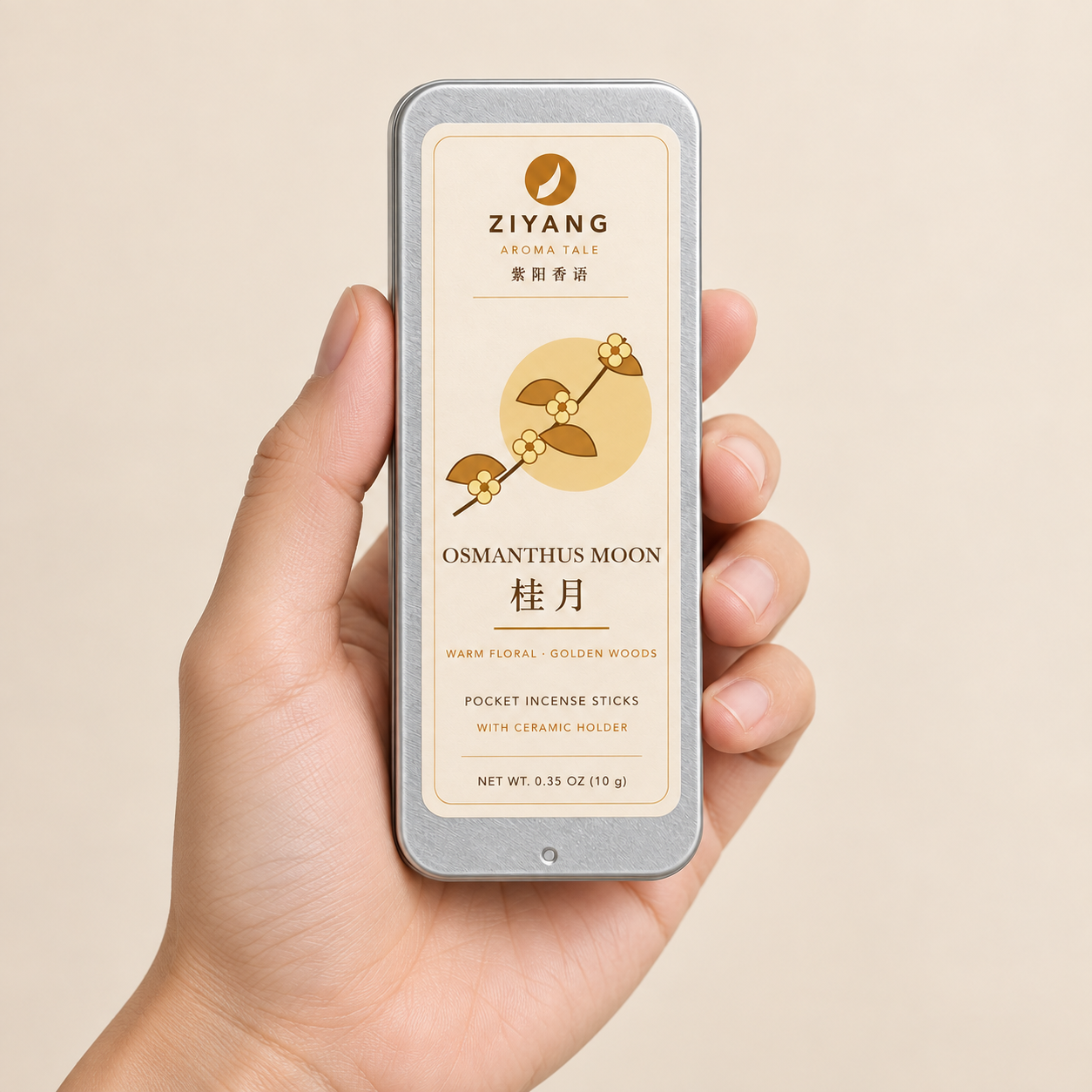
- Write down the product and the aroma notes listed on its label.
- Record where and when you used it.
- Note fragrance strength, smoke level, and how long the scent remained.
- Mark whether you would choose the same scent for tea, reading, meditation, or another setting.
Avoid universal promises
Fragrance preference is not determined by gender, astrology, or a single cultural symbol. Incense should not be presented as a way to change physical cycles, emotions, or health. Its role here is fragrance, atmosphere, and personal ritual.
Safe use
- Use a stable, heat-resistant holder on a clear surface.
- Keep away from drafts, fabrics, children, and pets.
- Ventilate the room and stop use if smoke or fragrance causes discomfort.
- Never leave burning incense unattended; extinguish it fully before leaving the room or resting.